

Life broadly presents us with two paths. The Sanskrit term ‘Preyas’ denotes the pursuit of short-term pleasures, which, while satisfying, can be depleting. Conversely, ‘Shreyas’ represents the journey towards long-term well-being and ultimate joy. Embracing the path of Shreyas may not be the ultimate goal of a spiritual practitioner, but it better equips one for self-realization (Brahma-vidya) and everlasting bliss.
According to Kathopanishad, a Vedantic text, the path of Shreyas guides a person from one life to the next in pursuit of Dharma and Moksha Purushartha1 until one attains Self-realization. It elucidates that two paths are laid before humans: one leads to the greater good and the other to immediate pleasure. The one who opts for Shreyas achieves well-being, whereas the one who selects Preyas descends into pain and suffering.
अन्यच्छ्रेयोऽन्यदुतैव प्रेय-
स्ते उभे नानार्थे पुरुषँ सिनीतः ।
तयोः श्रेय आददानस्य साधु
भवति हीयतेऽर्थाद्य उ प्रेयो वृणीते ॥
However, there are various stages2 in one’s evolution towards Shreyas.
Stages of Spiritual Evolution
These are the broad stages of humans as they move through the spiritual evolution. According to Indian scriptures, this is generally accomplished over several lifetimes. Yet, if the understanding is clear and one has an earnest desire (and has the grace of the Divine), then the highest goal of life can be accomplished in one lifetime alone as seen in the cases of several Saints.
- Primary Preyas (Instinctive lifestyle):

At this stage, life choices are motivated by the pursuit of immediate pleasure. Despite the risk to health, addictive behaviors, sensory indulgences, and intoxicants are sought after. There is a quest for thrill, dangerous escapades, self-centered pleasures, and egoic gratifications, driven by primal instincts. Primary focus is the quest for physical gratification and sustenance of body for the purpose of enjoyment. There is a lack of spiritual foresight, and a belief that there is neither an afterlife nor a state of higher, enduring happiness. This viewpoint is in line with the Charvaka philosophy, or that of a Materialist.
- For someone at this stage, both the means and the end in life are driven by Preyas (short-term joy), with a sole focus on Artha and Kama purusharthas (material and sensory pleasures).
2. Progressive Preyas (Informed by Worldly Wisdom):

At this stage, one makes life decisions in pursuit of enduring happiness – valuing healthier food, desiring the company of good friends and family, engaging in wholesome entertainment; striving for career success, recognition in a particular field, or to create a lasting legacy. The focus shifts from purely physical pleasures to those of the mind. One begins to depend on logic, science, and the advice of those with worldly experience.
- Means and End: A dedication to ethical and moral methods, even though they may lead to transient worldly achievements. One may be seasoned in worldly knowledge yet lack spiritual insight. Occasionally, there may be aspirations for the path of Shreyas, but the primary refuge lies in Preyas, which includes material wealth, social connections, and ego-driven successes.
One seeks Dharma Purushartha (the pursuit of ethical means) in addition to Artha and Kama Purushartha.
3. Basic Shreyas (Spiritual inclination):

Individuals start to align their life choices with spiritual values and service, engaging in activities that foster positive societal values, such as establishing spiritual centers and constructing places of worship (temples, kendras, etc). They may adopt honesty in their dealings, embark on pilgrimages to holy sites (tirthayatras), and seek the company of the spiritually inclined (satsangs). A belief in the afterlife, the transmigration of the soul, and the repercussions of one’s actions in this life may develop. Nonetheless, there may be a tendency to rationalize certain indulgences in pleasures and sensory gratifications.
The path’s vision might be obscured by the absence of credible Guru or Gurus in one’s life, a lack of understanding of the liberating scriptures (moksha shastras), and spiritual practices (sadhana). Consequently, there may be vacillation between higher aspirations and immediate pleasures, with a risk of reverting to a life dominated by the latter, particularly in the absence of guidance and spiritual discipline.
While the pursuit of ultimate goodness or Shreyas guides one’s intentions and goals, the commitment to these means may waver due to ingrained habits from the past (vasanas). This is seen in the question posed by Arjuna to his Guru, Lord Krishna: “What is that force which compels us to commit wrong actions much against our good intentions.”
अथ केन प्रयुक्तोऽयं पापं चरति पूरुष: |
अनिच्छन्नपि वार्ष्णेय बलादिव नियोजित: ||
Reaching this stage of evolution, one becomes conscious of their past mental conditioning and habitual forces, and recognizes the necessity to resist these influences.
- The primary pursuit becomes Dharma, a righteous and ethical life, and Moksha Purushartha, the quest for ultimate freedom and eternal bliss.
4. Advanced Shreyas (Pursuit of Spiritual Wisdom):
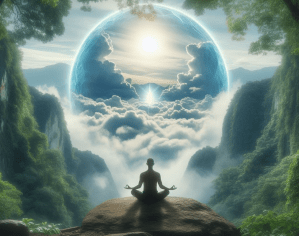
At this point in one’s spiritual journey, one may adopt any of the four yoga paths—karma, bhakti, dhyana, and jnana—or a combination thereof, depending on the life stage (Ashramas). Spiritual wisdom is crucial for steadfastness in Shreyas and achieving Self-realization. While sensory pleasures may be indulged in, a practitioner at this stage has the will to give up any habits. In worldly interactions, he or she may make use of a functional ego, but engagement in egoistic pursuits is rare. Any regression to earlier stages of Preyas is typically brief, as the guidance of a Guru, the wisdom from Scriptures, and the deep impressions from personal Sadhana (positive samskaras) swiftly guide one back to a life dedicated to Shreyas.
One at this stage also upholds the duties and responsibilities of their ‘Ashrama’ without neglecting spiritual practices. In all of one’s pursuits in life, the means and the end one adopts is Shreyas alone.
- The primary pursuit is Moksha Purushartha, while adhering to the fundamental tenets of Dharma.
Conclusion
Shreyas and Preyas should not be mistaken for religious concepts of accruing merits or sins for the afterlife. Rather, understanding Shreyas and Preyas can be a vital tool for personal transformation and happiness. They are not intended for judging others but for self-assessment. If we lack happiness and contentment, if we struggle with physical and mental challenges, or if we feel we are not making spiritual progress, then it is crucial to realign our lives with the path of Shreyas.
Furthermore, each day and every moment present both a test and an opportunity. Therefore, it is wise to make daily choices that lead to liberation.
1Purusharthas are the goals and objectives that humans seek after in life. Artha purushartha is the pursuit of material goals and wealth; kama is the seeking of personal desires and gratifications, dharma is moral and ethical living according to scriptural injunctions and moksha is ultimate freedom and happiness
2 The stages mentioned here are just for ease of understanding. These stages are based on texts that explain of various such signs of spiritual unfoldment for sadhakas.

 Swami Nirgunananda Giri